
Dealing with anxiety naturally write for us

Dealing with anxiety naturally Write For Us : Many persons already recognize that activities like yoga, workout, meditation, and therapy can help reduce anxiety. But what do you do when staying calm in an empty waiting room, pouring alone to an appointment during rush hour, or staying still on an MRI table?
We spoke with Carmella Wygant, a licensed clinical social worker. Here are seven strategies she uses to manage anxiety in the moment, and why they help relieve stress.
1 Diaphragmatic breathing
What it is: Conscious control of an automatic process.
How to do it: Close your eyes and inhale as much air as possible. Try to inhale so that your belly expands. Hold your breath for a insufficient seconds, then exhale slowly. Try to exhale as much air as possible while tensing your abdominal muscles.
Why it works: “The slower you respire, the more your parasympathetic nervous system is activated, which is responsible for calming the body after a fright or shock,” says Wygant. “It’s impossible to be scared and calm simultaneously, so focus on lengthening your exhale to get the most benefit from it. A long exhale signals to your body that everything is OK.”
2 Simple stretches
What it is: Release tension with these movements that you can do almost anywhere.
How to do it: Lightly press the tip of your tongue to the rooftop of your mouth; your jaw will open and relax. Tilt your head forward and slowly roll it clockwise, then counterclockwise on your neck. Raise and lower your eyebrows a few times to relax your facial muscles. Shrug your shoulders as if to say, “I don’t know,” then lift them briefly before relaxing.
Why it works: “People hold a lot of tension in their jaws, necks, and shoulders and don’t even realise it,” Wygant notes. “But as psychologist Dr. Teresa Rando says, ‘If you can reduce the body, you can relax the mind.'”
3 Use your words
What it is: Describe strong feelings verbally.
How to do it: Ask yourself queries that activate the analytical parts of your brain. “What emotion am I feeling right now? Anger? Fear? Rage? Why am I feeling this way? Is it because of something that happened or what I’m afraid of?”
Why it works: “PTSD research shows that some people take longer than usual to recognise a threat reduction,” Wygant says. “But when asked to label or describe their emotions, their prefrontal cortex is activated, and they calm down. Then they can realise, ‘Oh, it’s just a stick, not a snake.'”
4 Guided imagery
What it is: Using your imagination to create a sense of well-being and safety.
How to do it: Think of a person, place, or thing that takes you joy or comfort, and visualise it in as much detail as possible. If it’s the ocean, for example, smell the salt water, watch the seagulls fly by, feel the warmth of the sand under your feet, and listen to the waves deafening on the shore. If it’s a symphony, admire the beautiful texture of the varnished wood of the violin, feel the soft velvet of the seat cushion, and listen to the bright, joyful notes of the trumpet. Then revenue five slow, cleansing breaths, and with each breath, imagine inhaling love, peace, comfort, and exhaling fear, anxiety, and tension.
Why it works: “Research shows that the human body can respond to visualising an action as well as performing it,” explains Wygant. “For example, triathletes have seen increases in brain activity and heart rate simply by watching videos of other triathletes.”
5 Change your language
What it is: Using a second linguistic to redirect your brain.
How to do it: If you speak multiple languages, including American Sign Language, find someone who also speaks one of your additional languages and talk to them. Or watch a TV display, listen to a radio show, read a book, or go to a news site in your native language.
Why it works: “When you switch to another language, a different part of the brain takes over,” explains Wygant. “It takes your attention away from your emotions.”
6 Lose yourself in music.
What it is: Using melody as a distraction.
How to do it: The “language shift” applies to music, too, because making music activates a different part of the brain. So if you have an instrument and know how to use it, spend a few minutes practising a song or two. Or, if you can’t, imagine playing one of your favourite pieces and enjoy it to the fullest.
Why it works: “Playing music just stretches your brain a break,” explains Wygant. “I remember during GCSEs in high school, students would line up to play the piano in one of our hallways. Because when you’re making music, you’re not thinking about structure or organic chemistry. And you can think much more clearly and solve problems better afterwards.”
7 Make a new playlist
What it is: Create a new music collection on your smartphone, capsule, or computer.
How to do it: Start with three of your favourite songs. Then add three more songs you loved last year, in college, high school, or as a kid. Continue as long as you like, or until you have a complete collection.
Why it works: “Music relaxes you,” says Wygant. “It’s as simple as that. And when the memories and feelings that certain songs evoke are very pleasant, they completely distract you. The mind can’t focus on two things at once. So change the channel and forget about your worries.”
How to Submit Your Articles?
To write for us, you can pitch us at contact@beinghealthlyblog.com
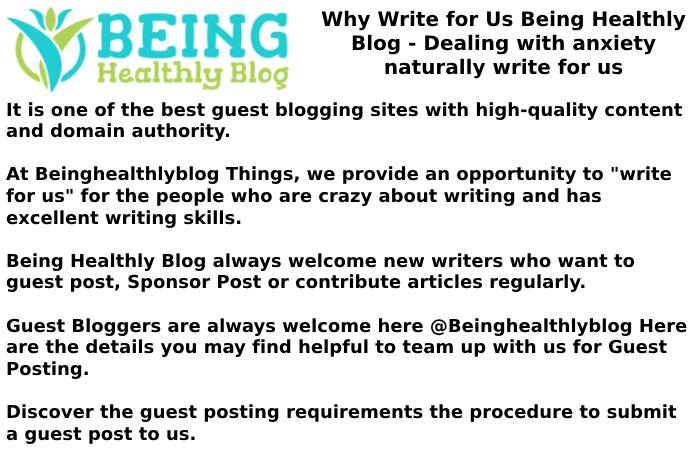
Why Write for Us Being Healthly Blog– Dealing with anxiety naturally Write For Us
Search Terms Related to Dealing with Anxiety Naturally
- Natural remedies for anxiety
- How to reduce anxiety naturally
- Holistic treatments for anxiety
- Natural ways to calm anxiety
- Non-medication anxiety relief
- Best exercises for anxiety relief
- Meditation techniques for anxiety
- Breathing exercises for anxiety
- Yoga for anxiety and stress
- Journaling prompts for anxiety
Search Terms for Dealing with anxiety naturally Write For Us
- write for us + health
- write for us health
- write for us +health
- write for us + health and fitness
- write for us health and wellness
- write for us health and fitness
- write for us+ health
- write for us+health
- write for us + fitness
- health blogs write for us
- health blog write for us
- write for us health blog
- write for us fitness
- health + write for us + guest post
- write for us health guest post
- health write for us guest post
- write for us health free
- mental health write for us
- health+write for us
- write for us + mental health
- “write for us” + “health”
- “write for us”+health
- health and fitness write for us
- fitness write for us
- write for us health and beauty
- write for us medical
- medical write for us
- write for us wellness
- health care write for us
- health blogs + write for us
- wellness write for us
- medicine write for us
- health+ write for us
- health and wellness + write for us
- write for us + health and beauty
- write for us health tips
- healthcare write for us
- write for us” + health
- write for us healthcare
- write for us medicine
- write for us ”health”
- health write for us
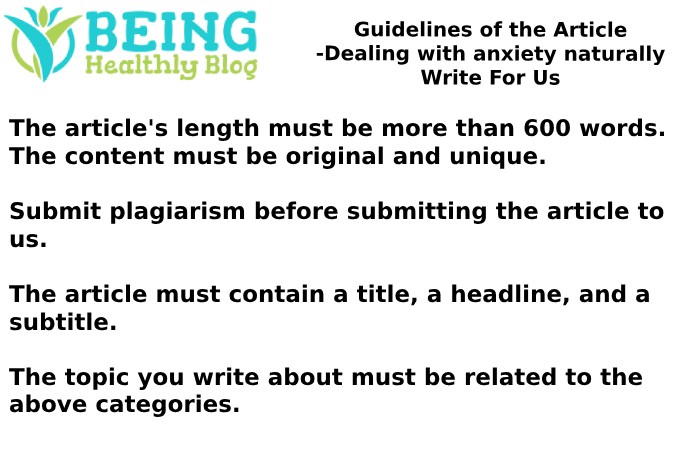
Guidelines of the Article – Dealing with Anxiety Naturally Write For Us
You can contact us at contact@beinghealthlyblog.com