

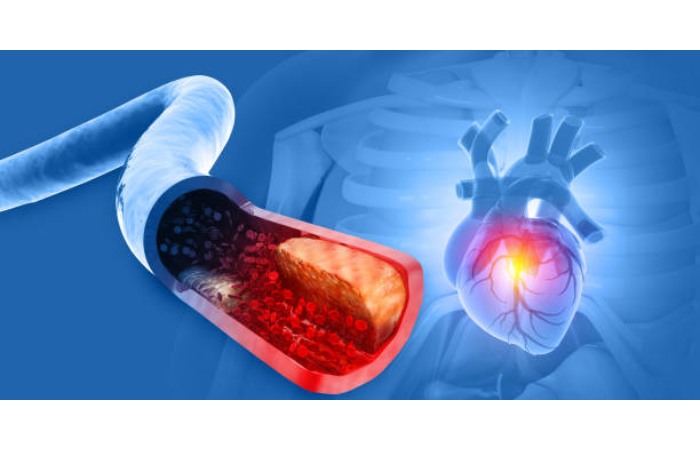
Cardiovascular disease is a general term cast-off to describe conditions that affect the heart’s or blood vessels’ health. Many health problems associated with heart disease are related to atherosclerosis, or the buildup of plaque on the walls of the arteries. In people with heart disease, the buildup can be central to blood clots, which can block blood movement and cause a heart attack or stroke.
The disease is the leading cause of death in the United States, with most deaths occurring in people over the age of 65. One in three Americans takes heart or blood vessel disease.
Outdated risk issues for cardiovascular disease include male gender, older age, high blood pressure, high total cholesterol, low HDL (high-density lipoprotein) levels, and smoking. In addition, other risk issues, such as diabetes and exposure to air pollution, contribute to the development of cardiovascular disease.
Numerous scientific studies have shown that air contamination can worsen existing cardiovascular disease and contribute to the development of the disease. The evidence is robust for exposure to outdoor particulate pollution. Delicate particulate matter (particles smaller than 2.5 µm in diameter, or PM2.5) can increase the risk of cardiovascular events.
Research by the EPA and others has found that exposure to higher concentrations of PM2.5 for just a few times or weeks can trigger heart attacks and cardiovascular disease-related deaths. Long-term exposure can lead to an augmented risk of circulatory mortality and a reduced life expectancy.
For the individual, the risk of cardiovascular disease from particulate pollution is lower than the risk from many of the other well-established risk factors described above. However, for the general population, short- and long-term exposure has been shown to increase hospitalizations for serious circulatory events, such as coronary syndrome, arrhythmia, heart failure, stroke, and sudden cardiac death, particularly in people with established heart disease.
People with chronic heart disease may experience one or more of the following symptoms after exposure to fine particles:
- Heart palpitations
- Unusual tiredness
- Dizziness
- Difficulty breathing
- Chest tension or pain in the chest, neck, or shoulder
What is PM2.5?
Particulate pollution includes:
PM10: inhalable particles, which are typically 10 micrometres or less in diameter; and
PM2.5: fine inhalable particles typically 2.5 micrometres or less in diameter.
How big is 2.5 micrometres? Think of a single hair on your head. The average diameter of a human hair is about 70 micrometres, making it 30 times larger than the largest fine particle.
Sources of PM2.5:
These particles come in numerous sizes and shapes and can comprise hundreds of chemicals.
Some are produced directly from a source, such as building sites, unpaved roads, fields, smokestacks, or fires.
Most particles are formed in the atmosphere due to multifaceted reactions of chemicals such as sulfur dioxide and nitrogen oxides, which are pollutants produced by power plants, industries and automobiles.
Where and When is Particle Pollution a Problem?
Sources of fine particle contamination include power plants, factories, cars, and wildfire smoke. These tiny particles can be found year-round and contribute to air quality problems in many major cities and other areas of the United States.
Some atoms can remain in the atmosphere for weeks or even weeks. As a result, particle pollution made in one area can travel hundreds or thousands of miles and influence air quality in regions far from the source.
Research has determined that particle pollution levels can be incredibly high under the following circumstances:
- Near busy roads, urban areas (especially during rush hour), and industrial areas.
- When smoke is in the air from timber stoves, fireplaces, campfires, wildfires, or prescribed burns.
- When the weather is calm, allowing air contamination to build up. For example, hot, humid days with stagnant air have much higher particle concentrations than days with air partially “cleaned” by rain or snow.
Because of their small size, fine particles out-of-doors can enter homes and buildings. Therefore, high levels of outdoor particle pollution can raise indoor particle pollution concentrations.
Who is at increased risk of PM2.5 exposure?
Scientific evidence suggests that specific populations may be at increased risk of PM2.5-related health effects, which may include cardiovascular clinical outcomes. These include:
- People with underlying cardiovascular disease (e.g., ischemic heart disease, heart failure) or previous cardiovascular events (e.g., myocardial infarction, stroke)
- People with diabetes
- People with high cholesterol
- Non-white populations
- People who are obese
- People with low socioeconomic status
- Older adults
People living in areas with polluted air: Although the United States has seen improvements in air quality and reductions in PM2.5, many people are still exposed to high levels of pollutants because of where they live or their vulnerability due to health conditions. People who live or work near roads, train stations. Seaports, or industrial areas may be exposed to higher levels of PM2.5.
People exposed to wildfire smoke: Wildfire smoke. Which includes wildfires and prescribed burns, is a complex mixture of pollutants, including PM2.5. A significant component of the smoke. Studies have shown that contact with wildfire smoke can cause a diversity of health effects. Particularly in people with pre-existing lung and heart conditions.
People who smoke tobacco products or are exposed to secondhand smoke: Smoking tobacco products is a foremost cause of lung cancer, heart disease, and stroke, among other diseases. In addition. The health effects of secondhand tobacco smoke on adults and children who do not smoke are harmful and numerous. Secondhand tobacco smoke causes cardiovascular disease (heart disease and stroke). Lung cancer, sudden infant death syndrome, more frequent and severe asthma attacks,